Happy Earth Day! Papers: Heart fossilization is possible and informs the evolution of cardiac outflow tract in vertebrates. Open Access in eLife. Vertebral development in Paleozoic and Mesozoic tetrapods revealed by paleohistological data. Open Access in PLOS ONE. A Centrosaurine (Dinosauria: Ceratopsia) from the Aguja Formation (Late Campanian) of Northern Coahuila, Mexico. Open Access inContinue reading "Fossil Friday Roundup: April 22, 2016"
Breeding Young to Survive: Growth Patterns in Therapsids during Earth’s Biggest Extinction Event
When you think of mass extinction events, you often picture the events themselves: either a single, massive event that wreaks havoc on the environment and its organisms, or a longer-term series of events that changes the structure of ecosystems and the diversity of organisms that inhabit those habitats. Either way, catastrophe. There are the famousContinue reading "Breeding Young to Survive: Growth Patterns in Therapsids during Earth’s Biggest Extinction Event"
Why does it hurt to breathe cold air? Who “nose”?
I am always astounded that we humans have made it as far as we have. Being large, nearly-hairless apes, it’s amazing that our ancestors managed to survive as they migrated out of Africa and into Eurasia, facing much harsher and colder climates than they had been accustomed to. But I assume that human success hasContinue reading "Why does it hurt to breathe cold air? Who “nose”?"
A new look at old bones reveals patterns of neck elongation in elasmosaurids
I think at this point it’s no secret that I really really really like aquatic animals, especially of the extinct variety (in case you don’t believe me, see here and here and here and here and here and here! Whew!!). So I just couldn’t resist featuring another study on aquatic organisms that came out thisContinue reading "A new look at old bones reveals patterns of neck elongation in elasmosaurids"
What a pain in the…arms! A record-breaking number of injuries in a theropod dinosaur
Ouch! That word came to mind a lot while reading a new paper published today in PLOS ONE. In the new paper, authors Phil Senter from Fayetteville State University and Sara Juengst from Appalachian State University, both located in North Carolina, describe the many injuries inflicted upon one poor Dilophosaurus wetherilli. And to be honest,Continue reading "What a pain in the…arms! A record-breaking number of injuries in a theropod dinosaur"
Gone Fishin’ in the Cretaceous: A New Species of Acanthomorph from Canada
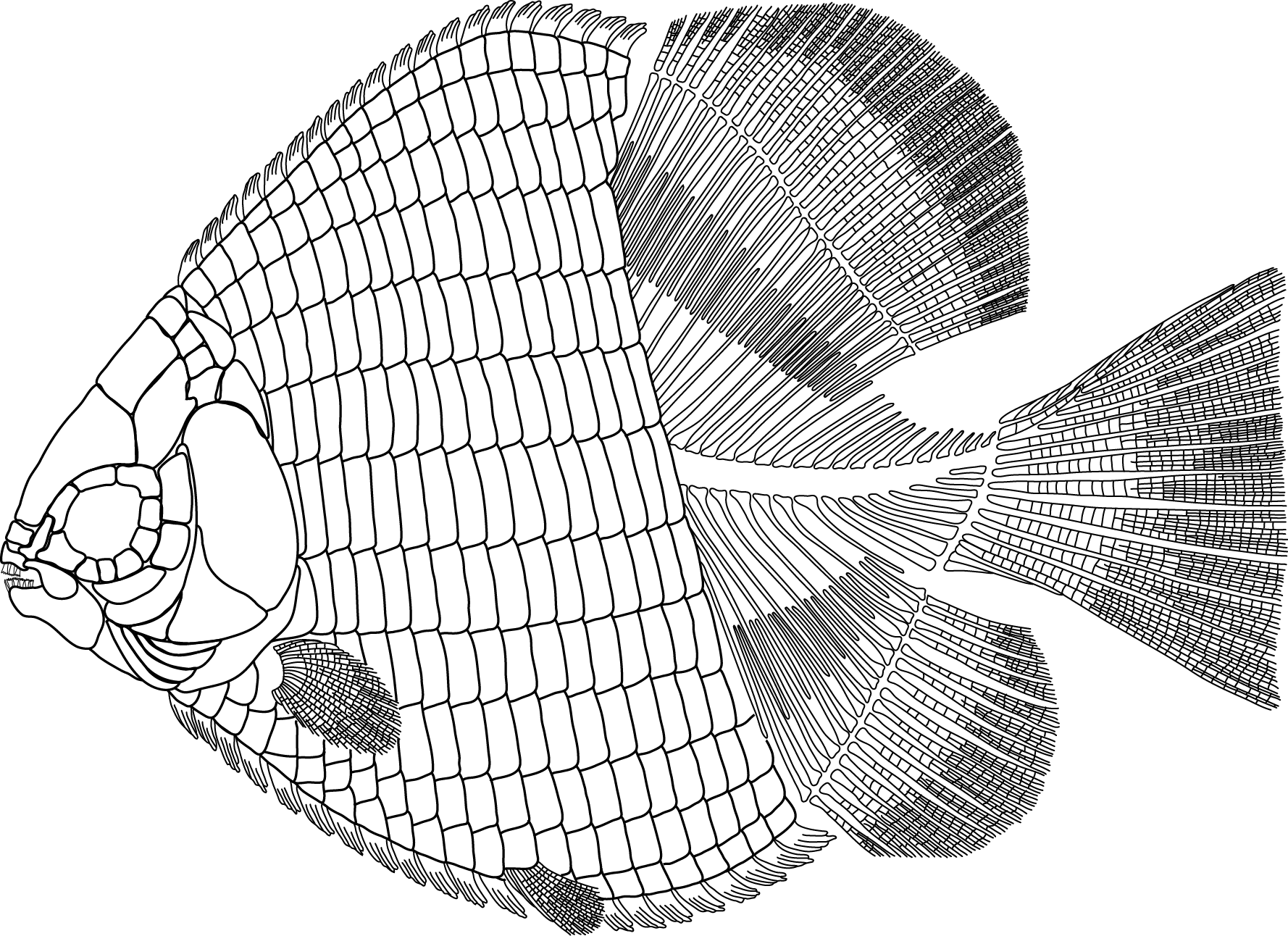
For being one of the largest groups of vertebrates, and having one of the richer fossil records among organisms, the relationships of fishes are still hotly debated. Humongous datasets are being compiled that involve molecular (both nuclear and mitochondrial) data, compared and contrasted with thorough morphological analyses. (I'm not going to get into all ofContinue reading "Gone Fishin’ in the Cretaceous: A New Species of Acanthomorph from Canada"
Featured Paleoartist: Studiospectre’s Stephen R. Moore
Speaking on behalf of Andy, Jon, and myself, we are always striving to make the PLOS Paleo Community a useful venue for our readers (and you can help us even more by taking the PLOS Blogs reader survey before February 15!). In addition to presenting and reviewing the latest in paleontology Open Access research, weContinue reading "Featured Paleoartist: Studiospectre’s Stephen R. Moore"
A Day in the Life of an Ammonite
Several years ago, back when I was working as the lab and collections manager for the St. George Dinosaur Discovery Site in St. George, Utah, we constructed a temporary exhibit with hundreds of ammonite shells from all over the world. One of our museum volunteers, an older French lady volunteering as a museum greeter andContinue reading "A Day in the Life of an Ammonite"
Eocene Fishes from Libya: Completing a Picture of the Past
One of the largest, and sometimes overlooked, fossil record belongs to fishes, spanning hundreds of millions of years since their origin in the mid-Paleozoic. Such an immense fossil record has given ichthyologists an advantage in developing comprehensive hypotheses of evolutionary relationships of fishes both living and extinct. But even with such a expansive fossil record,Continue reading "Eocene Fishes from Libya: Completing a Picture of the Past"
Happy Fins: Plesiosaurs Flapped like Penguins
One of the most infuriating things about being a paleontologist is being able to study some of the coolest organisms that have ever inhabited the Earth, yet never being able to see one in life. We’ll never know with complete surety what color they were, what they sounded like, and how they moved. Thankfully, newContinue reading "Happy Fins: Plesiosaurs Flapped like Penguins"
 Sarah Z. Gibson