
I am the Assistant Professor of Geology in the Department of Atmospheric and Hydrologic Sciences at St. Cloud State University (SCSU) in Saint Cloud, Minnesota. I received my B.S. in Geology from Southern Utah University (Cedar City, Utah), M.S. in Geology from the University of Kansas (Lawrence, KS), and received my Ph.D. in Geology with an emphasis in Vertebrate Paleontology from the University of Kansas.
Professional, Education, and Outreach Experience
I am passionate about the natural world both living and extinct, and biotic and abiotic. And I love sharing my passions with others in a way that invigorates them to be curious, explore the world around them, and to think critically about the ways in which the Earth has changed and the ways in which we can protect it. I have been a professor at SCSU for six years, and teach courses on physical geology (AHS 220), historical geology (AHS 305), physical hydrology (AHS 230), rocks and minerals (AHS 325), paleobiology (BIOL 414/514), as well as offering introductory science courses for non-majors in topics such as natural disasters (AHS 106 Natural Hazards and Human Society) and evolutionary biology and ecosystems (BIOL 102 The Living World).
I also teach field-based courses that take students to geologic sites throughout the state of Minnesota and learn fundamental measuring and mapping skills important to a successful career in the geosciences (e.g., AHS 307 Field Geology). Upper-level geoscience content that I teach at SCSU includes courses on surficial and glacial geology (AHS 322), and sedimentation and stratigraphy (AHS 423); these also have a field-based compontent that takes advantage of central Minnesota’s regional geologic context.

Outside of teaching I seek out local and national outreach opportunities. I partnered with St. Cloud Park and Recreation in 2023 to offer a youth (age 4–6) program on dinosaurs and other fossils (“Dino Dig”). This event was extremely popular and sold out within minutes of registration opening on their website. In 2024, we are expanding the Dino Dig program to two events, and adding a “Fossil Explorers” program for youth ages 7–10. I plan on continuing this collaboration with the city of St. Cloud, even with the potential of developing adult programming on fossils or rocks and minerals.
I have partnered with Skype-A-Scientist to engage with K-12 students on a variety of STEM topics. In 2023–2024, I had the opportunity to connect with four classrooms across the United States, ranging from grades 1 through 12. These have been a fantatic opportunity to give diverse students in both urban and rural settings an opportunity to connect with a woman in STEM, and encourage a curiosity in the natural world.
From 2015–2019 I served as an editor for the Public Library of Science (PLOS) Paleontology Community blog, where I covered research published in PLOS ONE and other open access journals, promoted paleontological research, created online events (e.g., Reddit “Ask Me Anything” and contests) and social events at conferences (e.g., Society of Vertebrate Paleontology annual meeting), and provided a venue for resources and other tools for members of the online paleontological community. The PLOS Blogs Network was shut down during a company restructuring, but my blog posts have been archived here on my website.
I have worked at several museums and institutions. For two years I served as a preparation lab and collections manager at the St. George Dinosaur Discovery Site at Johnson Farm, where I prepared Triassic fossil fishes and supervised fossil preparation work by volunteers from the Utah Friends of Paleontology. During my time there I gave educational tours and ran dig events for the community and for volunteer groups, such as Road Scholar (formerly Elderhostel), and developed and ran several youth programs (e.g., Junior Paleontology Club, Summer Paleontology Camp).
At the The University of Kansas Natural History Museum and Biodiversity Institute, I worked as a graduate curatorial assistant maintaining the herpetology and entomology collections, as well as supervising fossil preparation work being done by volunteers in the vertebrate paleontology lab.
I was also employed at The Field Museum as a contracted fossil preparator working on dinosaurs from the Jurassic of Antarctica (under the supervision of Peter Makovicky) and Permian tetrapods from Brazil (under the supervision of Kenneth Angielczyk). I was able to participate in the Field Museum’s annual Members Night event, that invites members of the museum to tour behind the scenes and interact with collections and researchers. I provided tours and educational outreach in both the paleontology and ichthyology collections. I also participated in the Field Museum’s “What the Fish?” podcast, to discuss topics in evolutionary biology and ichthyology.
Research Interests
My research is focused on investigating the evolutionary history of ray-finned fishes during the Early Mesozoic (~230–195 Ma), with a focus on the biodiversity of ray-finned fishes from the Upper Triassic Chinle Formation of southeastern Utah. I study the anatomy of extinct fishes, within a phylogenetic framework, to formulate hypotheses of evolutionary relationships and address evolutionary questions. Much of my research is focused on several groups of ray-finned fishes occurring in the Chinle Formation, many of which remain undescribed and poorly understood, both in their morphology and their evolutionary history and relationships to other ray-finned fishes. I named and described the morphology of a new genus of semionotid fish, Lophionotus, with two new species occurring in the Chinle Formation. Though the Semionotiformes (Actinopterygii, Holostei) have been the center of a few recent publications examining interrelationships within Holostei, the taxa occurring in North America have not been well-represented in these studies, particularly the taxa occurring in the Chinle Formation. My efforts to incorporate these taxa into a phylogenetic analysis have produced a comprehensive hypotheses of evolutionary relationships of holostean fishes, and provides clear evidence that Lophionotus was closely related to the genus Semionotus within the family Semionotidae. I continue to examine new species of semionotid fishes from other sites within the Chinle Formation, as well as from the Triassic Dockum Group of New Mexico.
My current and ongoing research has focused on the †Redfieldiiformes (Actinopterygii, †Palaeoniscimorpha) and their evolutionary relationships, both within the order †Redfieldiiformes and to other palaeoniscimorph fishes. I am examining their morphology within a phylogenetic context, with the ultimate goal of assessing the role they play in their ecosystems, as well as their diet, behavior, and life history. In 2018, I described a new species of redfieldiiform fish from the Upper Triassic Dockum Group of Howard County, Texas.
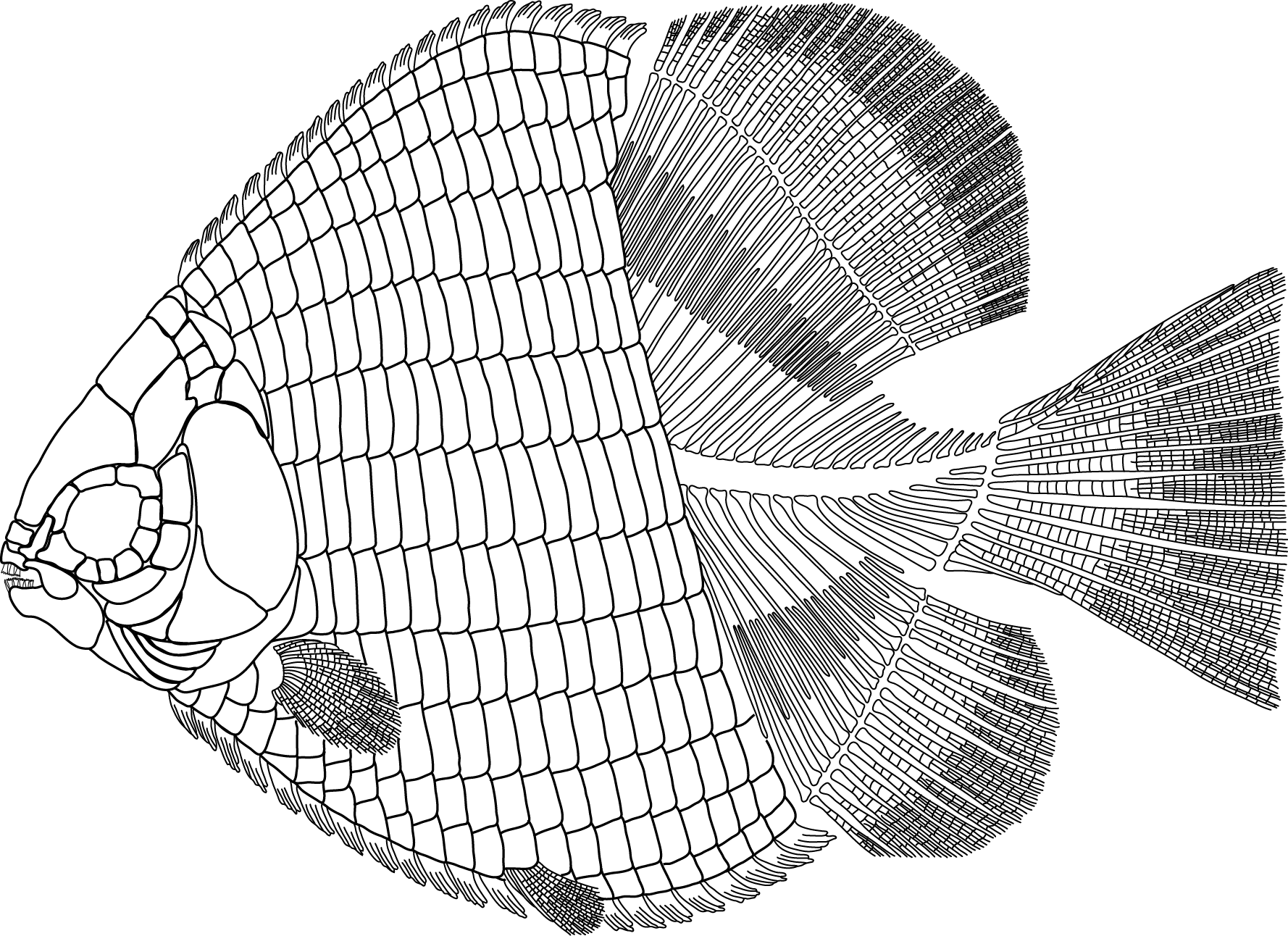
My research program also examines the evolution of specialized jaw and dentition morphology across several fish lineages, in order to better understand trophic niche evolution across ray-finned fishes in the Early Mesozoic. This research includes the discovery of the earliest evidence of a herbivorous ray-finned fish, Hemicalypterus weiri, from the Upper Triassic with a multidenticulate tooth morphology that is associated with herbivory by benthic scraping, which was published in 2015.
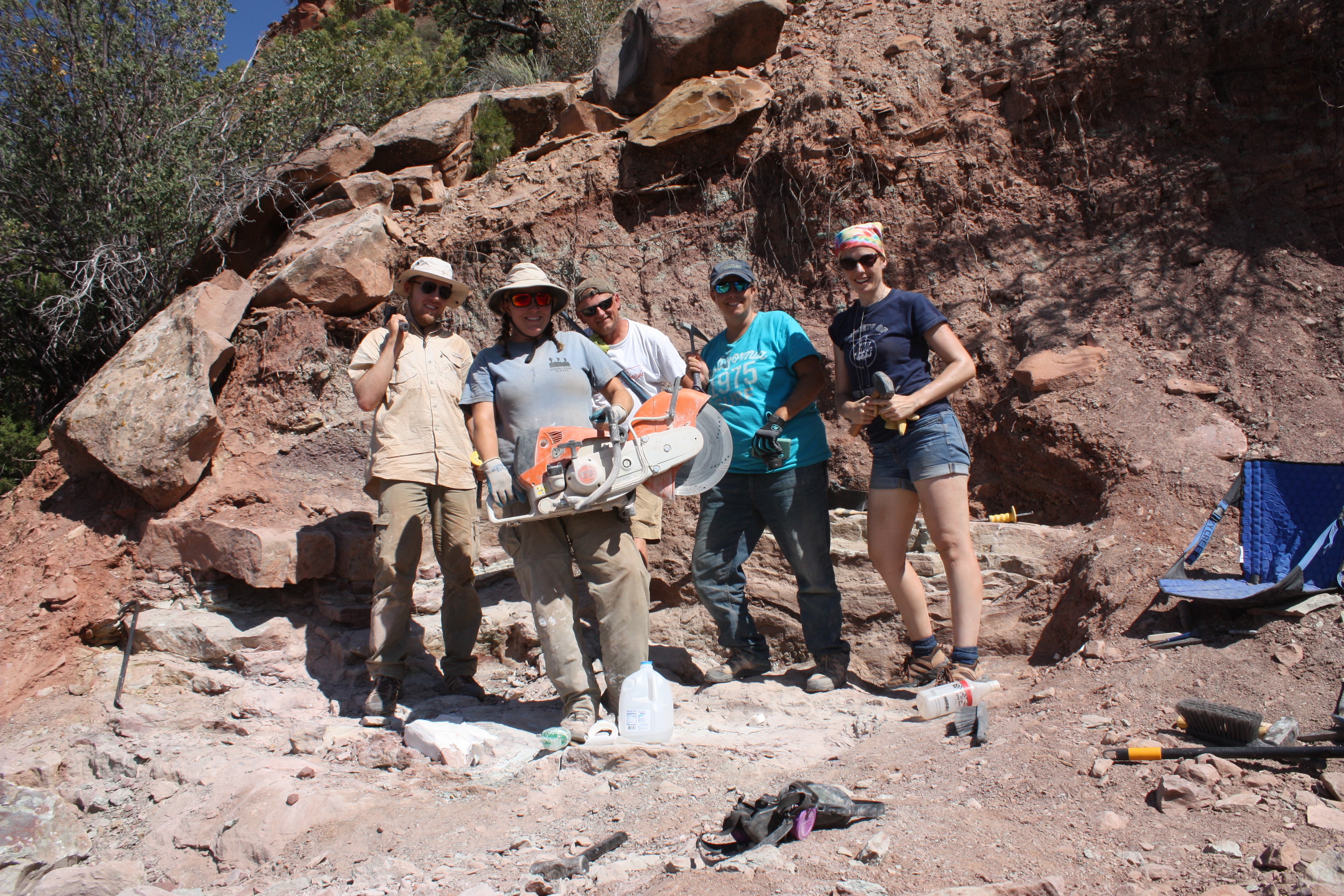
My work is a part of a collaborative effort with colleagues at the University of Utah and the St. George Dinosaur Discovery Site to explore and survey new localities and collect fossil material from the Upper Triassic Chinle Formation in San Juan County, Utah, with the intention of assessing the biodiversity found in these deposits. My work on the evolutionary history, relationships, and ecological niches of lower actinopterygian (ray-finned) fishes during the Early Mesozoic lends insight into a unique time in Earth’s history, a time that witnessed the evolution of diverse and fascinating biota (e.g., dinosaurs and archosaurian reptiles). This period in time saw major changes to the planet’s geography and several mass extinction events, both of which influenced episodes of faunal turnover and the opening of novel niches for both aquatic and terrestrial organisms.
 Sarah Z. Gibson